It’s been a little while since blog faves Peter Cat put out their most recent record. Arriving kicking, screaming, and clearly against its will in the world last November, it was (and indeed still is) called Starchamber and it was (and indeed still is) fucking mental. It’s one I listened to quite a bit over the cold winter months that followed too. Truth be told, it didn’t make them feel much warmer. If anything it made them feel colder. Darker. Denser. Intrinsically scarier. Four things I suspect the band will be heartened to hear.
Around its release I had loosely planned to get on a video call with frontman Graham Gillespie to discuss it, but normal life stuff intervened and somehow it never happened. Shortly after the record came out, the four-piece were on a short tour around the UK in support of it. I thought I’d missed my window to have a legitimate chat about what I thought was a great project as a whole, and felt a bit of a shitbag for saying I’d do something and not doing it. Anyway, fast-forward six months and the band have today released their first live EP, In and Out of Glasgow and London, which is made up of recordings from said tour.
Over the years writing this blog, sometimes I’ve found that things seem to fall into place at the right time. This is one of those times. I’d reached out to Graham with the idea of finally talking about Starchamber, proposing that I send questions across via email over a few weeks – waiting for a response before responding in kind with another question. My life is quite hectic and unpredictable at the best of times and I find it difficult to commit to things in advance, so the relative slow life of email appeals to me. Anyway, that’s what we did, and over the course of our correspondence it became clear that he was mixing the tracks that would become the EP. So that’s where we are. Finally we could talk about the album, but also about something new.
And new it is. The live record is a tricky thing in many ways. Often a money grab, sometimes a filler release to keep interest ticking over, and frequently a pale imitation of the actual experience of seeing (insert any artist here) in the flesh. What makes this one particularly interesting — and incidentally it’s none of those things I mentioned — is that there’s a thrill in hearing tracks from Starchamber captured in the real world, but also that three of the songs predate the album. Not only that, but they were in many ways the unwieldy building blocks that paved the way for it. Hearing those tracks, interpreted by the deranged band they kinda birthed is quite something.

ISY: It’s been a few months since you put out Starchamber. What are your thoughts on the album itself now, having a bit more distance from it?
I think it’s a both a feat and a vibe, in more or less equal measure. It was definitely a test that we set ourselves – as in, how far could we push the envelope of what the band was, and of how we arranged and executed our songs, whilst remaining in the guise of a more or less conventional indie rock act. But (like so much prog!), that sort of thing can easily come off as an insufferable technical exercise, which was a pitfall we were determined to avoid. So the golden rule was: if it sounds like a fretwank, or an algebra equation, then into the bin it goes!
Having taken that approach, I’m certainly pleased with the places it allowed us to go. Like on some of the more unhinged songs, like ‘Kiss The Ring’, ‘Is That All There Is to a House on Fire?’ or ‘Down From The Mountain’, what we’re doing with time signatures – sometimes in 10, sometimes in 7, sometimes in 5, lopping beats off at the start or the end of bars – gives the songs this breathless, run-ragged feel. Like they (and, by extension, you) are being pursued by some malevolent three-legged cryptid. I think the almost panicked feel of the instrumentals ended up informing the lyric-writing too, as looking back now, the words to this set of songs are more abstract, and more explicitly nervous, than anything I’d written before. I was trying to convey something about guilt and the inherent wrongness of being in the world, and touch on the primal fear of being expelled from the tribe, cast out into the desert.
At a moment in time in which social and community bonds are becoming increasingly frayed, perhaps this is a fear that resonates with other nervous wrecks out there too.
ISY: There were huge differences between the sound and approach of the first album and this one. I’m interested in how you went about recording this time out. Some of the arrangements are insane. Were all the songs pretty much worked out for the most part, or is there a degree of seeing where they go in the recording process? For example, I was quite taken with the more unconventional guitar parts…
The songs were all worked out beforehand. I wrote, arranged and put together multi-track demos of each tune before taking them to the band (with the notable exception of the final wig-out in ‘Execution’, which we all jammed out together in the rehearsal room). It was a continuation of the less structured composition I’d been using when writing The Magus EP, when I stopped thinking “how do I get back to the chorus from here?” or “how do I cut this down to three-and-a-half minutes?” and instead just let the music lead me where it wanted to, stacking sections on sections in a more meandering way, and trusting whoever was listening to find some enjoyment in that.
On Starchamber I wanted to ramp this up to 11. Before recording, myself and the producer (Luc Grindle) talked a lot about wanted to transpose the ‘jump cut’ idea from cinema into music: the idea that one section of a song could sound radically different to the last in terms of tone and production style, and that this transition could be disorienting for the listener. I got really into the idea of musical themes repeating in different ways, too, in different keys and on different instruments throughout the same song. You’ve got that on ‘Down From The Mountain’, where this 7-note da-da-da-da-da-da-da phrase repeats constantly throughout, sometimes melodic, sometimes chromatic, sometimes percussive.
So there was all that, but obviously there’s a lot more dissonance and abrasiveness on Starchamber than on our previous releases, too. That was the King Crimson influence: so many of their riffs lean into this dissonant tritone thing, with interlocking guitars doing super-precise things in parallel. If me and Kylie got even 5% of the way towards that level of sophistication with our guitar playing on Starchamber, I’ll die happy!
ISY: What’s the feedback been like from people? Also, I’ve been thinking a little recently about how independent artists can get attention and stuff – now that there’s no real kind of organic community of small blogs and music sites and stuff like that. What are your thoughts on getting heard. The idyllic vision of the work being enough doesn’t seem to hold true…
Feedback we’ve gotten on the record has been much the same as for previous Peter Cat releases, but in a more pronounced way. As in, 95% of people don’t get it, and are maybe a little scared or put off by it…but the 5% of people who do get it, they really, really get it! And to be honest, the only people I care about are those 5%. It’s always been the mission of the band to make cerebral pop music for restless, neurotic freaks like us, who are a little uncomfortable in their own translucent skin. As such, one understands that one’s lack of ‘crossover appeal’ means that one will probably never play at TRNSMT or get into heavy rotation on Radio 1.
But it is strange, there are certain things we achieved with Starchamber – like landing a splash feature on the Bandcamp global homepage – that if I could go back in time and tell my 17-year-old self that that was going to happen one day, he’d be assured that world domination had finally arrived. But as it stands, you get a little spike in your streams and sell a few records…but then life carries on as normal.
And that crosses over into those wider points around musical communities, streaming, social media, over-saturation, so on and so forth. It’s certainly true that the age of active discovery through small blogs, dedicated music sites etc. has long since faded, and has been replaced by a passive algorithmic ‘discovery’ through whatever Spotify/TikTok/Instagram/etc. happen to be pushing on people. But this isn’t a new dynamic: it’s the story of the internet more generally. Before corporate power and capital got their teeth into it, the early internet was collaborative, hobbyist, academically and scientifically-inclined – very much people over profit. But once your big commercial concerns get involved, centralisation and monopoly happens, and happen quickly, until you end up with what we have today – an internet in which culture is primarily curated by a handful of mega-conglomerates for the sole purpose of keeping us swiping.
I see the demise of blog culture and the rise of the algorithm as the music world’s own local version of that same global dynamic, and aside from the odd outlier here and there (Angine de Poitrine, looking at you), it does make it more difficult for challenging or thought-provoking music to really cut through.
If that sounds resigned, I certainly don’t mean it to be. I actually think there’s a lot of active resistance going on, and the proliferation of AI slop over these past couple of years has been a watershed moment for a lot of people, as it forces us to engage and think more critically about the power structures that govern our cultural lives, and about whether the future we’re hurtling towards is the future we actually want. In music scenes, I see resistance happening more offline than on, these days. It’s little things, like outdoor flyering for shows coming back in a big way, or mailing lists where artists actually send you physical letters or postcards. Things that have permanence. As our online music and cultural spaces become more crowded and overheated, these are the things I find myself thinking about more often.
ISY: I’ve noticed a lot more band flyers out and about down here too. In Southend where I am, there seems to be quite a healthy scene bubbling away. There seems to be a lot more younger people especially going out to watch live music, and venues seem to be pulling crowds by loading the bill with 3 or 4 bands a night. There seems to be a drift happening whereby people under 20 are discovering that they can make things happen… putting on shows and selling a lot of merch etc. For a long time it’s seemed as though the only way small venues can pull an audience in is by having a continuous drip of tribute acts on, but there seems to be something healthy stirring. Whether that’s a reaction to AI and stuff, I don’t know, but there’s a sense that something is changing. How are things where you are? We’re used to hearing about venues struggling, and I know they still are, but there does seem to be hope…
It’s great to hear about that being the situation on the ground in Southend – long may that continue! As someone who’s done a few self-booked tours of the UK, I have observed that the further outside of the major metropolitan areas you go, the more popular tribute acts seem to become. It was quite a helpful filtration system, actually: if the Fighting Cock in Nuneaton or wherever is booking The AC/DC Experience three nights a week, then they’re probably not going to want to book Peter Cat! As a younger man, I might have raged a little harder against that particular machine. Nowadays I try not to judge so much. Well, unless it’s a Rage Against The Machine tribute band…
I can only speak with any sort of insight to the music scene in Glasgow. I think there are a few different dynamics at play here, mainly good, but some which could be better. It’s an incredible city to be in for the sheer amount, quality and accessibility of live music at the local level. Most nights of the week, you can go out and see something brilliant that’ll stay with you, challenge you, maybe even change your perspective on things – sometimes you can see that for a fiver. And you can still find pockets of Glasgow where it’s possible to live relatively affordably, in a way that allows you the time and bandwidth you need to really hone what you do – whether that’s writing and performing, or organising and promoting DIY shows. You can’t really put your nose to the grindstone and become great at your craft when you’re working Monday to Friday at a soul-crushing office job just to barely cover rent, which was my experience of living in London. And to your point, it’s especially encouraging to see people in their teens and early twenties just taking the reins and making their own shows and scenes happen, rather than chasing the grace and favour of the legacy live music promoters – there’s a lot of that in Glasgow too.
ISY: My paying job is actually as an art teacher – although I’m a musician and painter on the side – and one of the things I am really surprised by is the way that young people do seem to be rejecting AI in pretty much all its forms. It is an area that interests me, I guess because it’s not going to go away. I’ve long talked about AI to students as being what the invention of photography was to painters in the 1830s… although multiplied by a thousand. You mentioned physical media being coveted more now earlier, and I think that’s totally right. I loved what you did with Starchamber as a wider project, with the book, the weird interactive game, and all of that stuff. Was that stuff in your mind right from the off, and also what are your thoughts on music and AI in general?
Starchamber absolutely was intended to be about way more than the music itself. My projects have been getting progressively more conceptual since I started making music, to the point where I don’t think I could just stick a bunch of songs on a record and call it good again – I’d always want to do more! The songs on Starchamber were coming from a specific thematic place, and it just inherently made sense to plaster that across as many media as possible. Writing the short stories for the book, in particular, was a very rewarding experience, as I’d previously never been able to finish any longer-form writing before. Having the songs as jumping-off points, and the fact the record already had this unifying theme, gave me some limitations within which to work, which helped spur me on and get the things finished. The other big incentive was the fact we pre-orders for the books went live before I’d even written a single word…
With respect to AI in general, I have a great many fears, as anyone who read The Starchamber Dialogues could probably tell. I think if you look to the type of people most invested in having AI audit and surveil our lives, both online and off – the Palantir class et al – I don’t think we’re dealing with people who have human progress and the health of the body politic at the forefront of their minds. I fear authoritarian creep quite deeply. I also fear that it might not even get to that stage, because of the size of the economic bubble created by these enormous datacentres being built over the world, funded through scarily under-regulated private credit markets and with national governments over-exposed to the associated risk. I’d love to say something along the lines of “technology is valueless, it’s people who give it value” – but I don’t think that’s true.
I think there are so many design features embedded within so much of the technology we use today which encourages behaviour in certain directions, and constrains it in others. You have to ask who that benefits, and what that’s doing to our minds.
And AI as it relates to music specifically? I predict that we’ll see a polarisation amongst music listeners, much in the same way as we’ve seen polarisation elsewhere in society. You’ll probably have those people who relate to music in a utilitarian sense, as something which primarily serves their needs and desires: something to get you pumped at the gym, or relax into a dinner party, for example. For those that way inclined, being able to prompt an AI to create music on demand that aligns with or regulates their mood will no doubt be a very convenient thing. Then by contrast, you’ll have the other segment who relate to music more actively, as cultural creation and exchange between human beings: who are open to the fact that music won’t always be comfortable or palatable, that it may challenge them, and that they might even seek out this challenge on purpose. I think uptake of the former may well entrench the latter.
And the risk with the former, of course, is that you remain cast in amber, forever.
ISY: You were talking earlier about how you and Kylie approached the guitars on the new stuff. You mentioned King Crimson too. What’s the best, most inventive/unhinged guitar playing on a pop record? It’s got to be Fripp’s stuff on Scary Monsters, right?
No arguments there! Fried my mind when I first heard Scary Monsters. His guitar’s this whole other track-within-the-track, locked in a constant kaiju battle with it. Bowie screaming “shut up!” at his shredding at the end of ‘It’s No Game’ always tickled me. The only other thing I suppose that’d come close is Jonny Greenwood on some of OK Computer, where it has shades of the twelve-tone-esque stuff he’d eventually spin out in his soundtrack work.
ISY: We’ve kind of gone all over the place here, and I guess it’s probably a good idea for us to talk about the live EP!
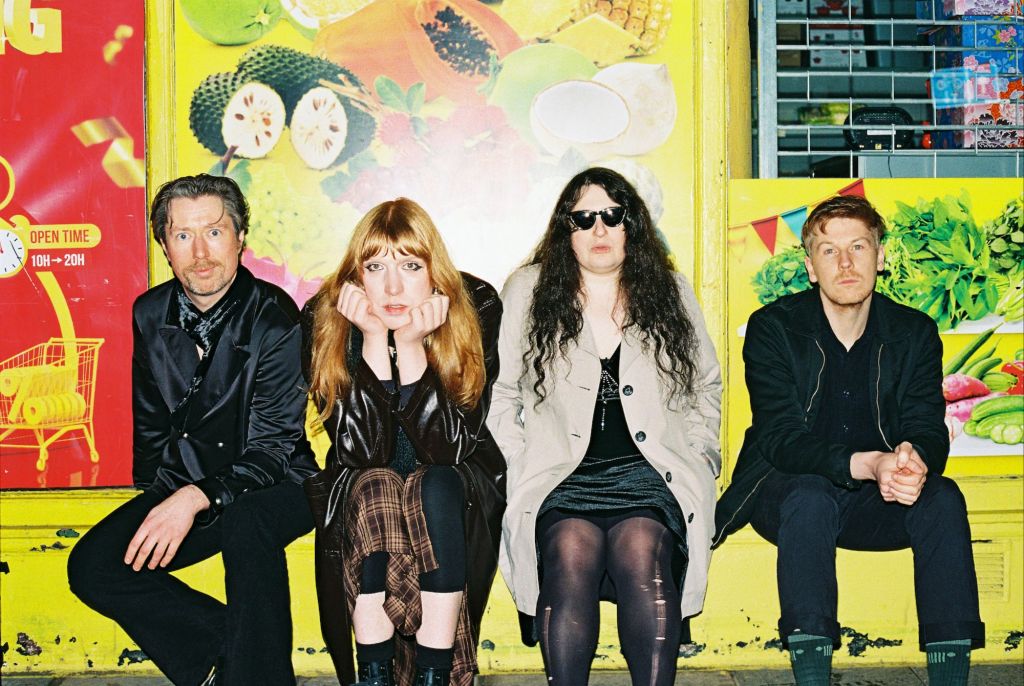
The live EP is taken from a show at Folklore in London in 2023, on a co-headline tour with my Trapped Animal labelmate Jeremy Tuplin. That tour was definitely the first time Peter Cat started to feel like a proper band, a real unit – as opposed to a bunch of friends gathered together in a room who were kind enough to be playing my songs. I guess you could say a sense of mission crystallised between the four of us. The four distinct elements – the way Kev plays the drums, the way Kylie plays guitar, the way Jack plays bass – started to inform my songwriting process too around this time, in a kind of feedback loop that would eventually create Starchamber, which was an album written to be played specifically by those people.
The title – In And Out of Glasgow And London – was sort of a play on a couple of things… Down and Out in Paris and London by George Orwell, of course, but also ‘In & Out of Paris & London’ which is an album track by The Divine Comedy, contenders for my favourite band of all time. But we’ve never gigged in Paris, so we had to get a little creative with the name! The original idea was to have half the EP be songs we performed in London, and the other half songs we recorded in Glasgow, but the hard drive that had the Glasgow set on it went kaput, so again…we had to get creative.


Leave a Reply